AI vs Traditional Project Management: Side-by-Side Comparison
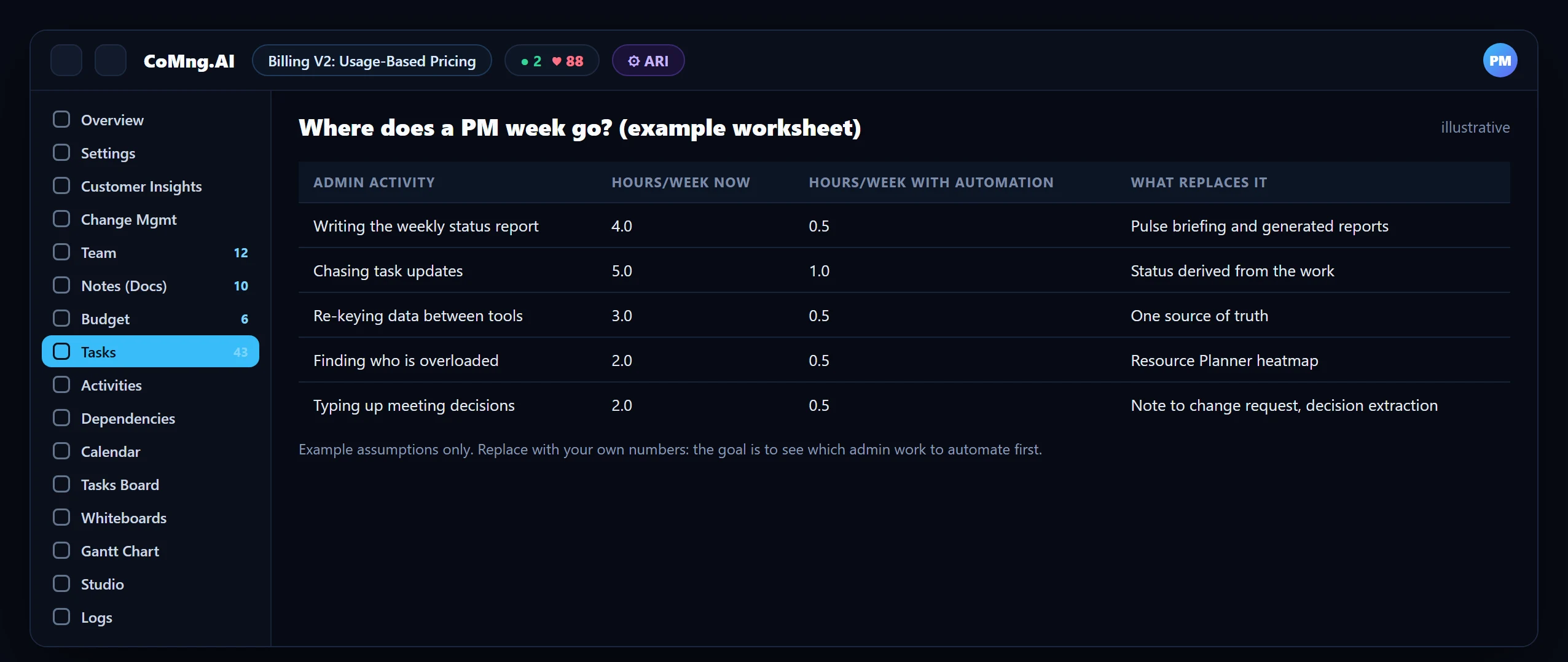
Traditional project management is not wrong; it is manual. The comparison that matters is not old versus new methodology, but where the effort goes and where problems get noticed.
AI-native delivery platforms differ from traditional project management tools mainly in where the effort goes: plans are generated, risk is monitored continuously, reports are generated and change control is built in. Traditional tools rely on people to transcribe status and notice problems.
- Same goals, different mechanics: both aim at scope, schedule, cost and quality; AI changes who does the transcribing and when risk is noticed.
- Biggest shifts: plans generated instead of typed, risk monitored continuously instead of reviewed weekly, reports generated instead of written.
- Where traditional still wins: small, simple projects; highly regulated paper processes; teams without clean data.
- A hybrid is normal: keep your methodology (waterfall, agile, hybrid) and automate its administration.
Seven Dimensions Compared
| Dimension | Traditional (manual) | AI-native (CoMng.AI) |
|---|---|---|
| Planning | Type the WBS and schedule by hand from a document | Generate the framework and tasks from a document, then review; audit coverage against the commitments |
| Tracking | Update status in the tracker, then again in reports | Status derived from the work; boards, calendar and Gantt share one data set |
| Risk | Risk register reviewed periodically | Continuous health score, ranked alerts, milestone conflicts, forecast finish |
| Capacity | Spreadsheet per team, updated occasionally | Weekly heatmap per person from task effort, 8 to 24 weeks ahead |
| Reporting | Retype status for each audience | Generate reports, presentations and plans from live data |
| Change control | Email chains and edited baselines | Change requests with sandbox preview, approval and audit log |
| Team coordination | Humans only; tools separate for any automation | Humans and AI agents on one roster with work orders and scoped keys |
AI-Native Delivery Platforms vs Traditional Project Management Tools
The comparison most buyers actually face is between three kinds of tool, not two methods:
| Traditional scheduling or tracking tools | Suites with AI add-ons | AI-native delivery platforms | |
|---|---|---|---|
| Built around | The schedule or the ticket | Broad work management | Live project data the AI can read and act on |
| Risk | Reports you run | Dashboards plus AI summaries | Continuous health, milestone flags, forecasts |
| Change control | Outside the tool or a workflow | Workflows and approvals | Change requests with sandbox preview and audit |
| AI role | Little or none | Assist with text | Generate, monitor, draft, brief agents |
| Governance of AI | Not applicable | Varies | Approval gates, bulk-change flags, scoped keys |
| Best for | Detailed scheduling; simple trackers | Organisations standardised on a suite | Delivery risk, change control, hybrid teams |
CoMng.AI is in the third column. For head-to-head comparisons see CoMng.AI vs MS Project and CoMng.AI vs Jira.
Where the Difference Bites
Noticing problems
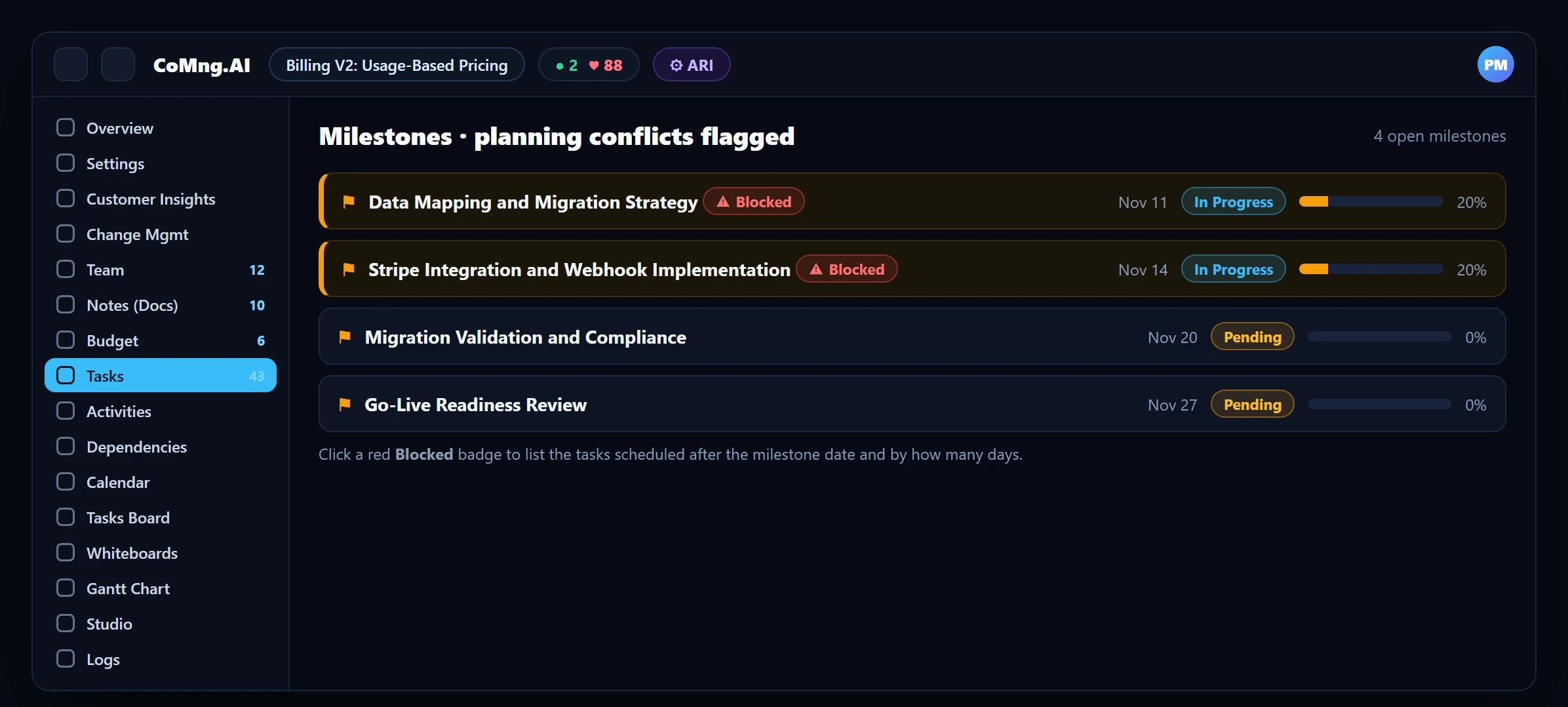
In the traditional flow, a problem is noticed when someone reports it or a review finds it. In the AI-native flow, the platform notices contradictions in the plan itself: a task scheduled after its milestone, effort that no longer fits a deadline, a person at 140% of capacity.
Controlling change
Traditional change control depends on discipline. AI-native change control makes the disciplined path the easy one: Pulse and ARI draft the request, the sandbox shows the effect, approval is explicit. See Change Request Impact Assessment.
Where Traditional Still Wins
- Very small projects where a checklist is enough and the setup is not worth it.
- Strict paper-based governance where the artefact is the requirement.
- Poor data discipline. If nobody will enter effort and dates, AI forecasts have little to work with.
- Politically driven reporting where the report is meant to be curated, not measured.
Even then, the free plan lets you try on one project without commitment.
You Do Not Have to Choose
AI-native tooling is method-agnostic. A waterfall PMO and an agile team both need accurate status, visible capacity and controlled change; the platform automates the administration while the team keeps its method. The practical path is to pilot on one project, as in Implement AI Project Management in 30 Days.
- Administration done by hand
- Risk reviewed weekly
- Change control by discipline
- Administration automated
- Risk monitored continuously
- Change control built into the workflow
About CoMng.AI
CoMng.AI is an AI-native project management platform that generates a project's plan, tasks, risks and budget from a description or document, monitors project health in real time, and gives both human teams and AI coding agents live access to the same project data, with a person approving every AI-generated change.
Run your next project with live health, not weekly guesses
Create a free project, import or generate a plan, and see Pulse, milestone flags and capacity in the first hour.
Frequently Asked Questions
What is the main difference between AI and traditional project management?
Where the effort goes. AI automates the administration (plans, status, reports, risk monitoring) so project managers spend time on judgment, stakeholders and decisions.
Does AI project management replace methodologies like Agile or Waterfall?
No. It is method-agnostic. You keep your methodology and automate its administration.
When should I stay with traditional tools?
For very small projects, paper-driven governance, or when the team will not maintain the data AI needs.
Is it riskier to let AI near my plan?
Not when AI proposes and people approve, with sandbox previews, deterministic checks on bulk changes and audit logs.
How do I test the difference cheaply?
Run one real project on the free plan and compare how early you notice risks and how long reporting takes.
How do AI-native delivery platforms compare with traditional project management tools?
Traditional tools are built around a schedule or a ticket and rely on people to report status and notice problems. AI-native delivery platforms are built around live project data, so they generate plans, monitor risk continuously, draft changes and run behind approval and audit controls.
Related reading
See the full guide: AI Project Management Strategy & Buying Guide