The Strategic Shift Matrix: Moving from Admin to Architecture
When administration is automated, the project manager's job does not shrink; it changes shape. This is a matrix for deciding what moves where, and a skills path for the manager who becomes a project architect.
AI moves project managers from administration to strategy by automating status, chasing and reporting. Sort your activities into automate, assist, keep and delegate-to-specs, then invest the freed time in negotiation, risk, design and leadership, and measure the shift.
- Four quadrants: automate, assist, keep and invest, delegate to specs.
- Role shift: from scribe and chaser to designer of plans, controls and decisions.
- New skills: reading telemetry, specifying work for agents, governing change.
- Measure it: track admin hours and time spent on stakeholders, risk and design.
Why the Role Has to Shift
Much of the traditional project manager's week is clerical: collecting status, reformatting it, chasing updates, reconciling spreadsheets. As the clerical work becomes automated, a manager who defined themselves by it has two choices: protect it, or move up to the work that was always the point: designing the plan, controlling change, managing risk and leading people.
The Matrix
Plot each recurring activity by how repetitive it is and how much judgment it needs:
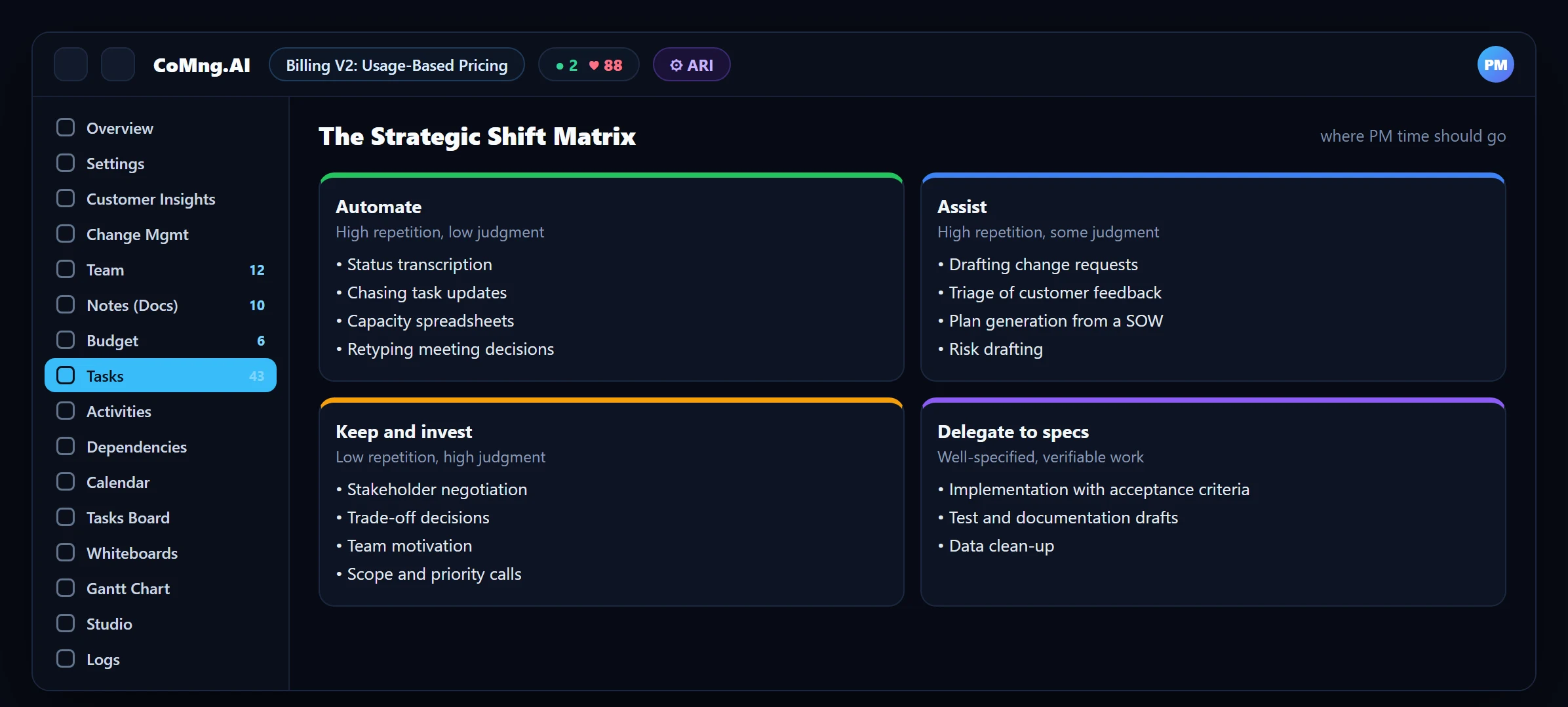
- Automate (high repetition, low judgment): status transcription, chasing updates, capacity spreadsheets.
- Assist (high repetition, some judgment): drafting change requests, triaging feedback, generating plans. AI drafts, you review.
- Keep and invest (low repetition, high judgment): negotiation, trade-offs, scope calls, team leadership.
- Delegate to specs: well-specified, verifiable work that humans or AI agents can execute against acceptance criteria.
The Tools Behind Each Quadrant
| Quadrant | CoMng.AI capability |
|---|---|
| Automate | Pulse briefing and trends, status derived from tasks, Resource Planner, generated reports |
| Assist | ARI, drafted change requests with sandbox preview, customer insight triage, plan generation and coverage audit |
| Keep and invest | Impact assessments and the audit trail that support negotiation; time reclaimed for people |
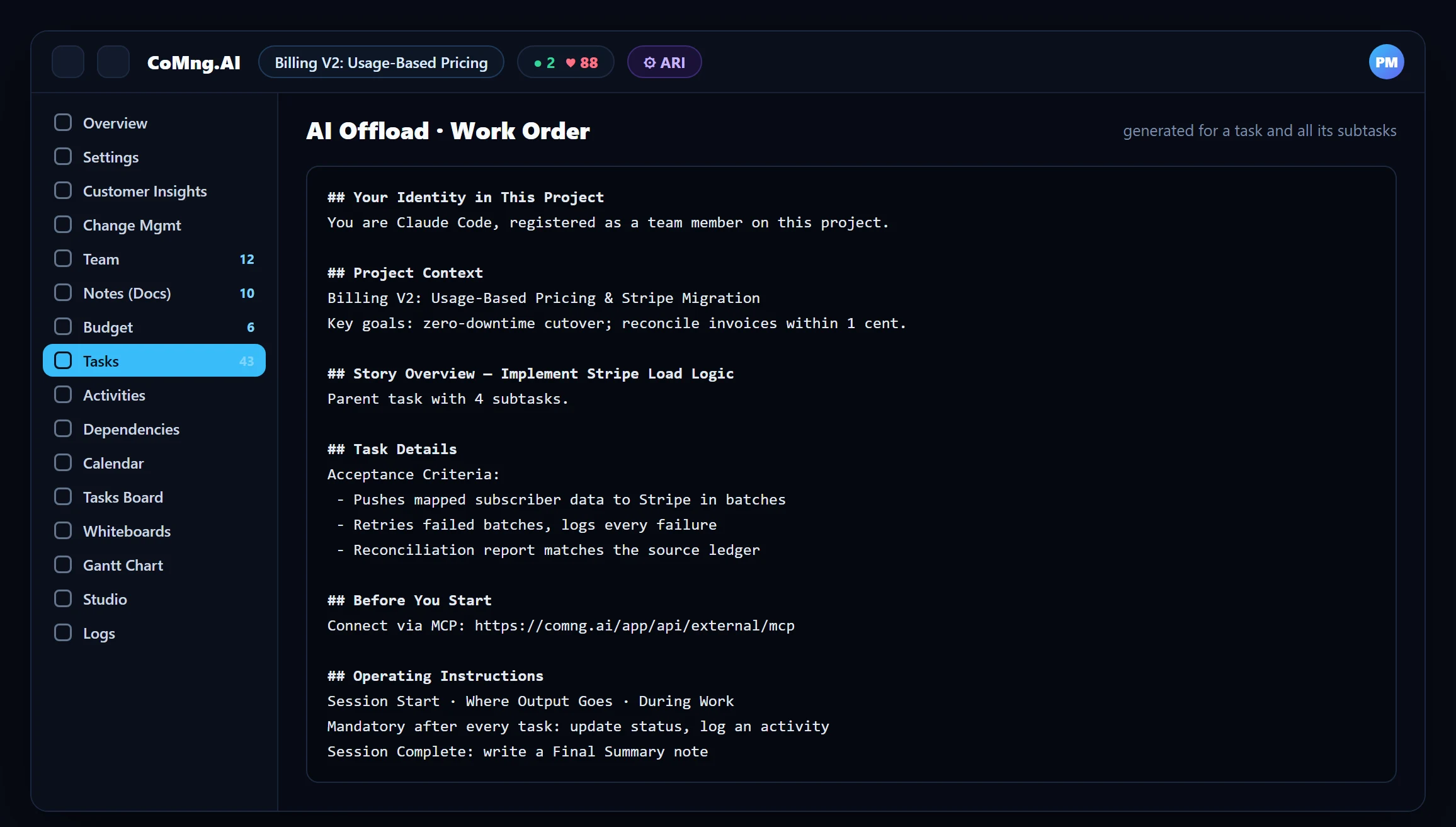
| Delegate to specs | Work orders with acceptance criteria for humans and AI agents; scoped API keys; MCP |
The Architect's Skills
Reading telemetry
Interpret Pulse sub-scores, trend, forecast and milestone flags; know when a signal is noise.
Designing the plan
Write scope, acceptance criteria and dependencies precisely enough for others, including agents, to act.
Governing change
Run change requests with impact assessment; know what to approve, defer or reject.
Orchestrating a hybrid team
Balance people and agents by workload, skills and accountability.
A structured path through these skills is outlined in the CoMng.AI Academy learning path.
Measure the Shift
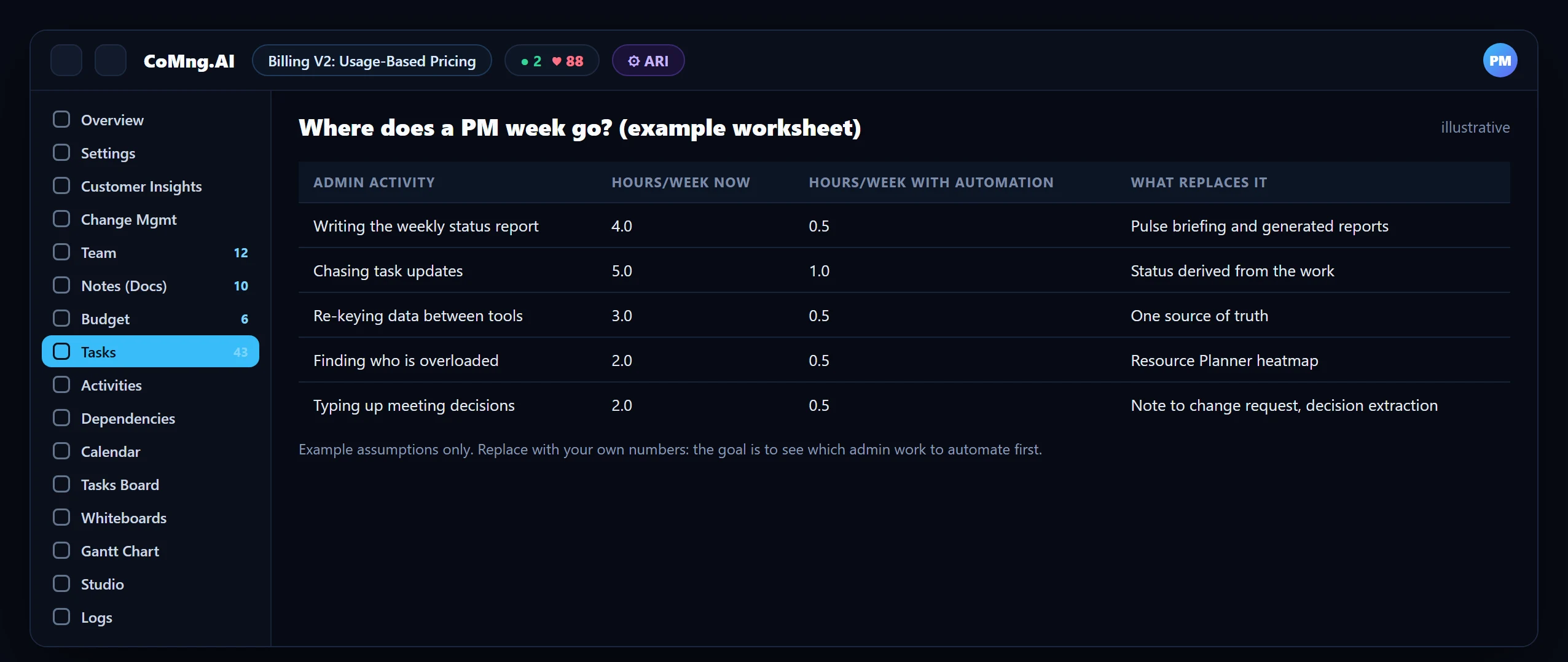
A role shift you do not measure is a hope. Track two numbers monthly: hours of administration per week, and hours spent on stakeholders, risk and design. Success is the first falling while the second rises, with delivery results at least as good.
- Scribe, chaser, compiler
- Value measured in reports produced
- Judgment squeezed into leftover time
- Architect, decision-maker, coach
- Value measured in risks avoided and decisions made
- Judgment first
About CoMng.AI
CoMng.AI is an AI-native project management platform that generates a project's plan, tasks, risks and budget from a description or document, monitors project health in real time, and gives both human teams and AI coding agents live access to the same project data, with a person approving every AI-generated change.
Run your next project with live health, not weekly guesses
Create a free project, import or generate a plan, and see Pulse, milestone flags and capacity in the first hour.
Frequently Asked Questions
What is the Strategic Shift Matrix?
A way to sort project management activities by repetition and judgment into four quadrants: automate, assist, keep and invest, and delegate to specs.
Does automation threaten project management jobs?
It removes much of the clerical work, but accountability, negotiation, trade-offs and leadership remain human. The role shifts from administrator to architect and decision-maker.
What new skills do project managers need?
Reading health telemetry, specifying work precisely for people and AI agents, governing change through impact assessments and approvals, and orchestrating hybrid teams.
How do I measure the shift?
Track hours of administration per week against hours spent on stakeholders, risk and design, alongside delivery outcomes.
Where should I start?
Audit your week, automate status and chasing first, then use the time for risk conversations and stakeholder alignment.
Related reading
See the full guide: AI Project Management Strategy & Buying Guide