The average project manager spends 70% of their time on admin and status updates. Here’s how AI-generated project reports are changing that – permanently.
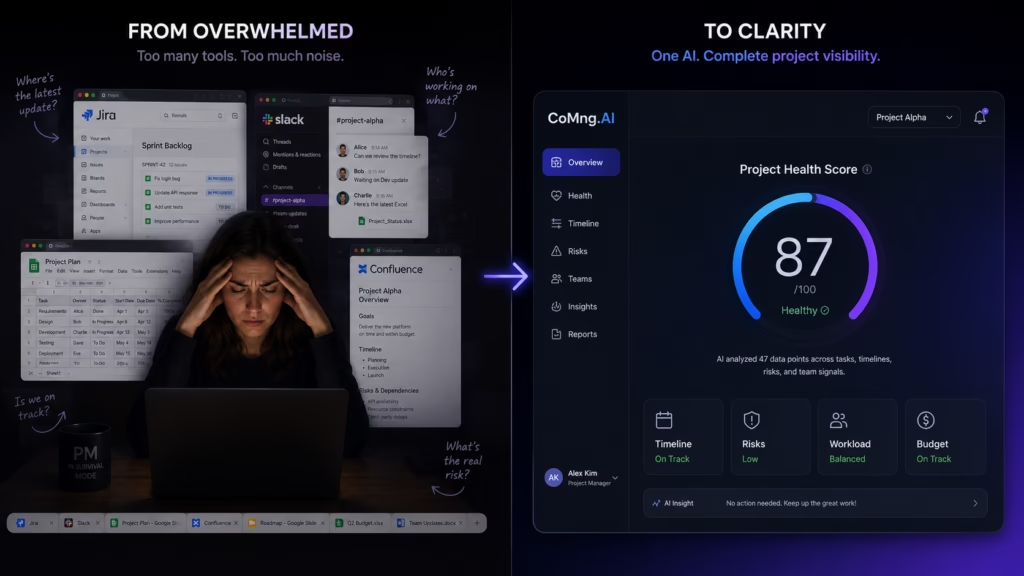
Every project manager knows the Friday afternoon ritual. You open your laptop, pull up a dozen tabs – Jira, Confluence, Slack threads, a spreadsheet someone emailed you on Tuesday – and spend the next two hours cobbling together a status update that will take your stakeholders three minutes to skim. Then you do it again next week. And the week after that.
This is the hidden tax of modern project execution. And it’s costing teams far more than they realize.
The Real Cost of Manual Reporting
Manual status reports aren’t just tedious. They’re structurally broken.
By the time you compile data from multiple sources, the information is already stale. By the time you format it into something readable, you’ve made judgment calls about what to include and what to leave out – calls that introduce bias, gaps, and blind spots. And by the time your stakeholders read it, they’re looking at a snapshot of a project that has already moved on.
There’s also the opportunity cost. Every hour a project lead spends writing status updates is an hour they’re not spending on the strategic, technical, and people decisions that actually drive delivery.
This is the problem that automatic report generation software is finally positioned to solve – not by generating slightly better templates, but by eliminating the reporting loop entirely.
What AI-Generated Project Reports Actually Look Like
The first generation of AI in project management was basically autocomplete. It helped you write faster but didn’t change what you were writing, or why.
The next generation is different. A true AI project reporting tool doesn’t wait for you to pull data – it monitors your project continuously, understands its health across multiple dimensions, and generates reports automatically from live context.
Here’s what that looks like in practice with CoMng.AI:
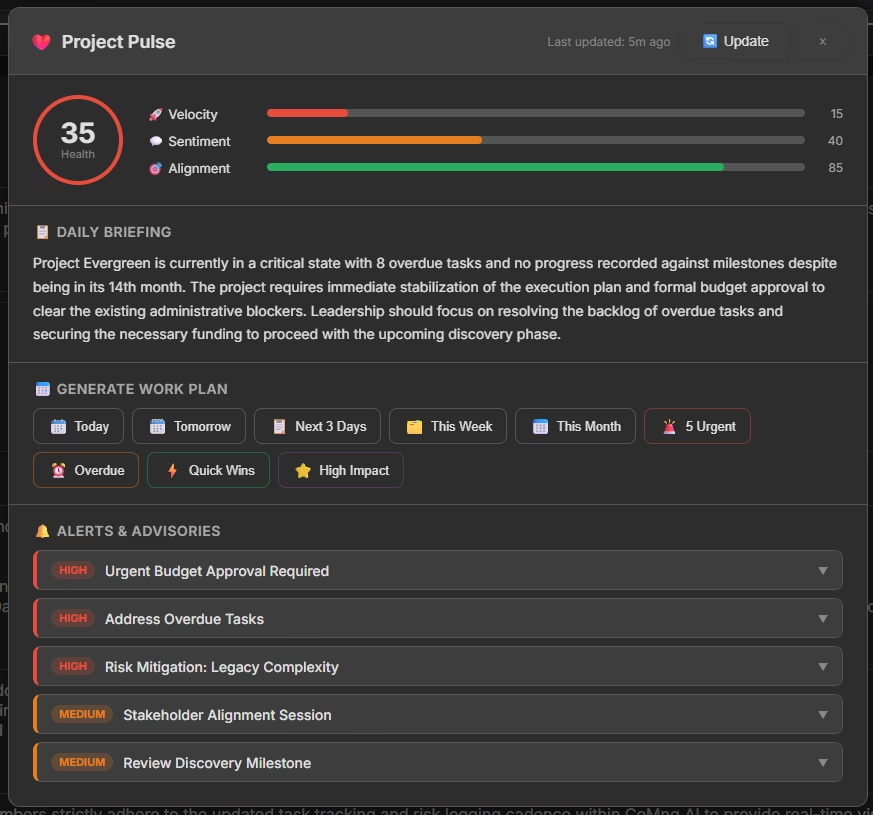
The Daily Briefing replaces your morning standup prep. Instead of checking five tools to understand where things stand, the AI surfaces a synthesized project health score – measuring velocity, team sentiment, and stakeholder alignment – alongside flagged risks ranked by urgency. High, Medium, and Low priority items, already triaged, ready to act on.
The Project Composer replaces your Friday report ritual. Need a status update for your executive sponsor? A kickoff email for a new stakeholder? A formal change control document? You describe what you need, and the AI drafts it in full – drawing on live project data, not a stale snapshot you assembled by hand. The output is structured, accurate, and ready to send or export.
Autonomous RAID+ Generation handles the register that nobody wants to maintain. Risks, Assumptions, Issues, Dependencies – the AI identifies and logs them as your project evolves, so you’re never walking into a review meeting with an outdated risk log.
The result: your stakeholders get better information, more frequently, with zero additional effort from your team.
AI Generated Reports: How to Automate Your Reporting Process
How to Eliminate Manual Reports With AI: A Practical Framework
If you’re evaluating how to automate project status reports in your organization, here’s a framework for thinking about it clearly.
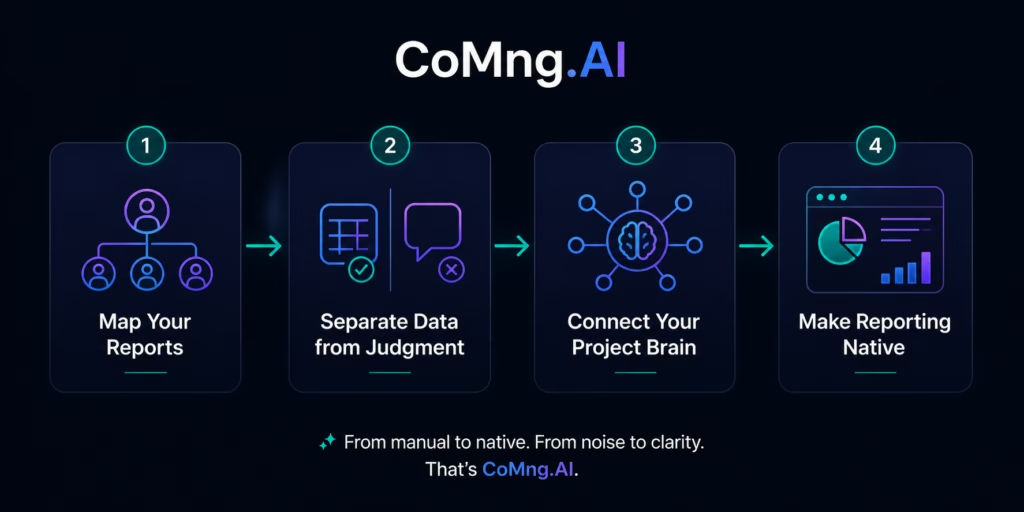
1. Identify Your Reporting Surface
Start by mapping every report your team produces: weekly status updates, executive dashboards, change requests, risk registers, budget summaries. Most teams discover they’re maintaining 8–12 recurring report types – many of which contain overlapping data pulled manually from different sources.
2. Separate “Reporting” from “Judgment”
Not everything in a report requires human judgment. Data aggregation, formatting, distribution, and routine status updates are all mechanical tasks. What requires human judgment is interpreting anomalies, making prioritization calls, and deciding how to communicate difficult news to stakeholders.
A good AI reporting system handles the mechanical layer completely, so your judgment is applied only where it matters.
3. Connect Your Project Brain to Your Reporting Layer
The reason most reporting tools fall short is that they’re disconnected from where work actually happens. True stakeholder report automation requires an AI that has cross-module context – understanding tasks, timelines, budgets, team capacity, and risks simultaneously – not a tool that imports a CSV and reformats it.
CoMng.AI’s architecture is built around this principle. Every module feeds a unified intelligence layer, so when the AI generates a report, it’s drawing on the full picture: what’s on track, what’s drifting, what decisions are pending, and what the downstream impact looks like.
4. Build Reporting Into the Project, Not Onto It
The biggest failure mode in report automation is treating it as a bolt-on feature. When reporting is a separate step – even an automated one – it still competes with project work for attention and resources.
The better model is a project execution system where reporting is native. Where the act of running the project is the act of generating the report. Where stakeholders can query project status in real time, not just receive scheduled updates.
This is what CoMng.AI means by “the project builds itself.” From the moment you describe your project, the AI scaffolds goals, milestones, risks, requirements, and tasks – and from that point forward, every action taken within the system is automatically reflected in the reporting layer.
What Stakeholder Report Automation Unlocks
When you remove the reporting burden from your project leads, something interesting happens: they get better at their actual jobs.
The time that was going to status updates goes to stakeholder relationships. The cognitive load that was going to data aggregation goes to risk identification. The energy that was going to formatting goes to decision-making.
And stakeholders get something they rarely have: transparency they can trust. Not a curated snapshot assembled under time pressure, but a live, AI-maintained view of project health that updates as the project moves.
For executives, this means genuine delivery certainty instead of weekly optimism reports. For PMOs, it means consistent governance standards without proportional administrative overhead. For teams, it means they can focus on solving problems instead of reporting on them.
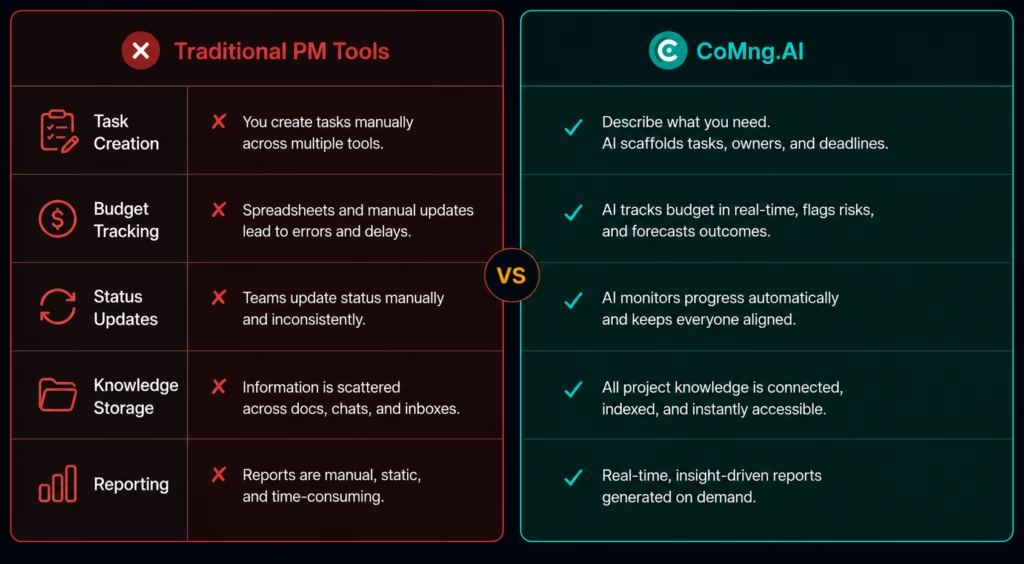
The Shift That’s Already Happening
The project management software market has spent two decades building better dashboards. Better ways to display the data that humans collect, organize, and maintain manually.
The next era is about eliminating that human maintenance layer entirely – not because humans aren’t valuable, but because the things humans are best at have nothing to do with data entry and report formatting.
AI-generated project reports aren’t a feature. They’re a signal that the underlying model of project execution is changing. The teams that recognize this early and adapt will be operating at a fundamentally different velocity than those still running Friday afternoon report rituals.
CoMng.AI is the Autonomous Execution System for project teams who are done spending 70% of their time on admin. From a single project description, CoMng.AI generates your entire project framework, maintains live health scoring, and auto-generates every report your stakeholders need – continuously, from live data, without manual effort.
[Start your project at comng.ai →]
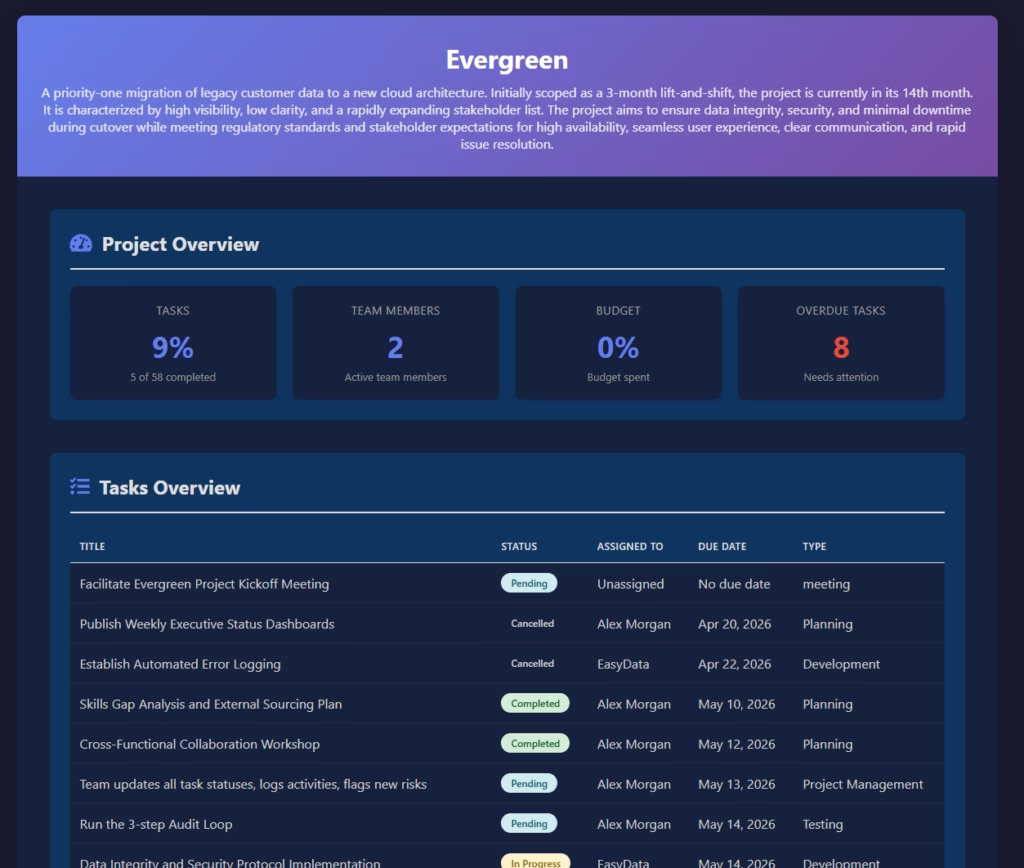
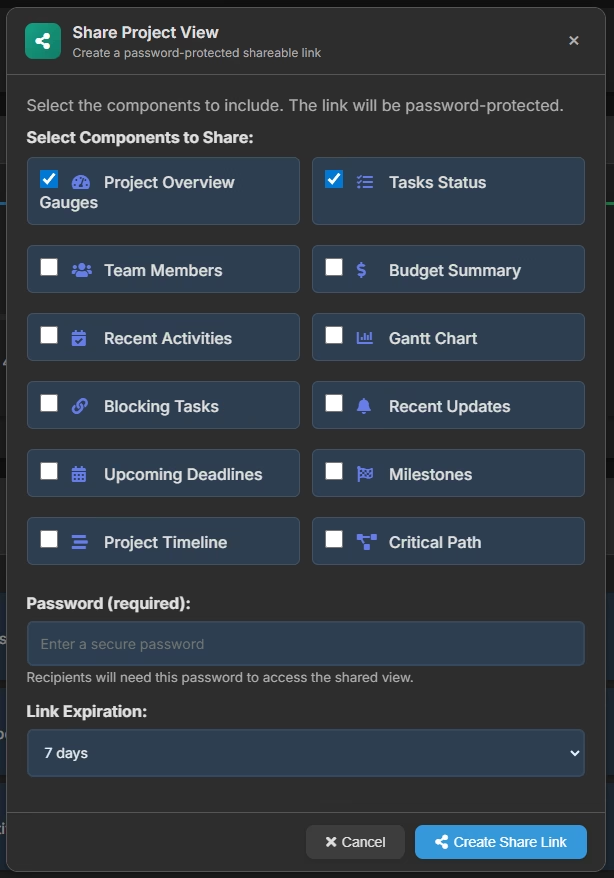
CoMng.AI provides a live project view that is continuously updated for your stakeholders. You can choose which parts of the project to display and secure it with a password. Share a unique link along with the password with your stakeholders for easy access. Additionally, use our advanced studio to generate static reports with a single click, covering any project aspect based on live data.